


- News
The Bank of England (BoE) held the base rate at 3.75% on Thursday (30 April). It is the third successive ‘hold’ vote by the BoE’s monetary policy committee (MPC), and it means rates have been stable at this level since December 2025. But with inflation likely to spike in the coming months due to sustained turmoil in the Middle East, the BoE’s balancing act is becoming more difficult.

At a glance
- The MPC has voted to hold the base rate at 3.75%. There was a majority of eight votes for a rate hold, versus one vote to increase the rate by 0.25 percentage points to 4%.
- The consumer prices index measure of inflation (CPI) was recorded at 3.3% in the 12 months to March, well above the Bank of England’s 2% target. It is predicted inflation could increase sharply this year due to energy price rises brought about by the conflict in the Middle East.
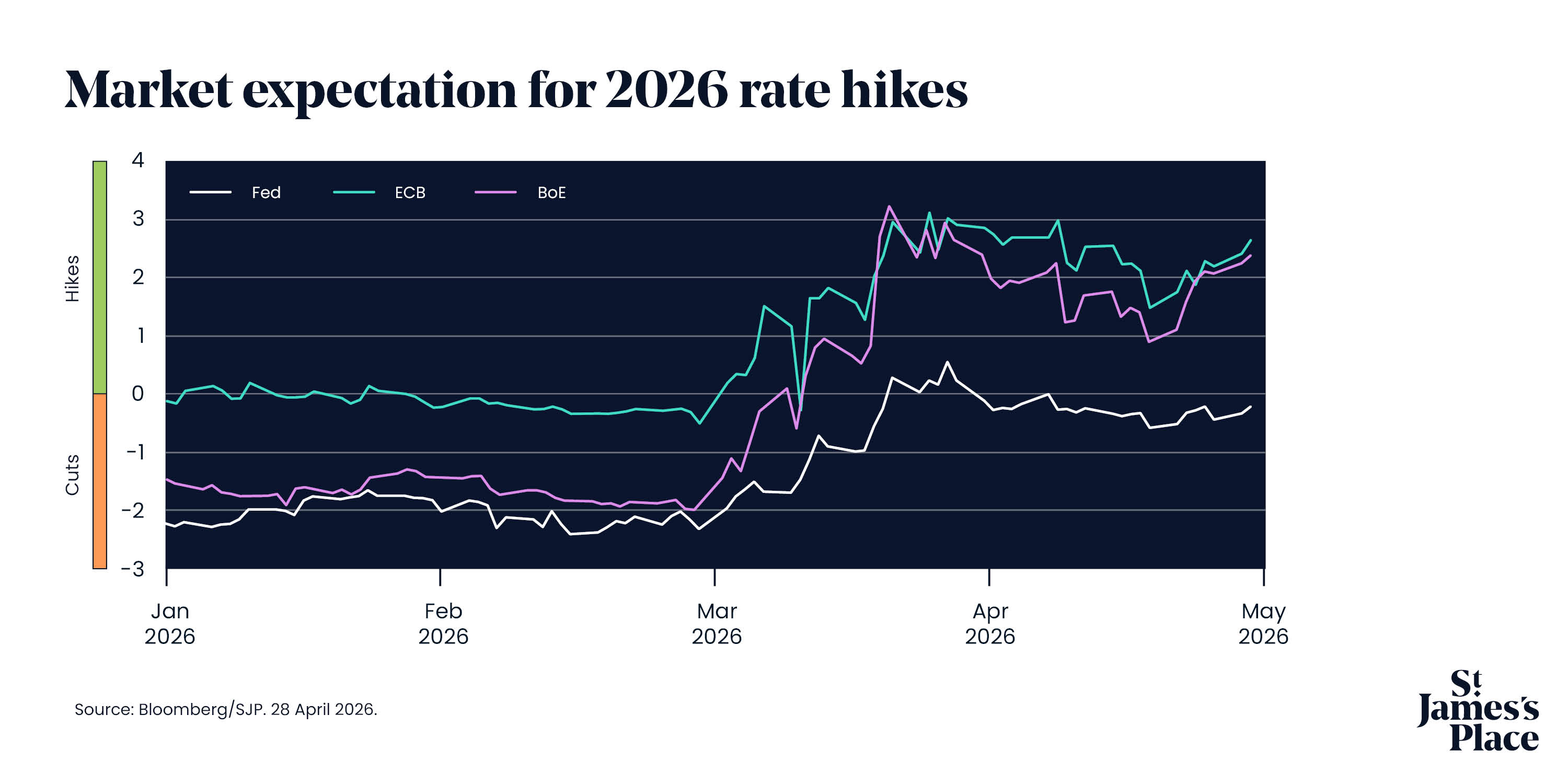
- Markets are now predicting at least two base rate increases (of 0.25% each) in 2026.
The base rate freeze on Thursday (30 April) had been widely expected by the markets. It is clear the BoE is taking a ‘wait and see’ approach, for now.
But with no end in sight to the US Iran conflict, sustained high energy costs are causing significant inflationary pressure. It is likely the BoE may need to act soon, by way of increased interest rates, to control rising inflation. Experts are now predicting a base rate rise when the MPC next meets on 18 June.
In its summary the BoE said: “The conflict in the Middle East means that prospects for global energy prices are highly uncertain. Monetary policy cannot influence energy prices but will be set to ensure that the economic adjustment to them occurs in a way that achieves the 2% inflation target sustainably. The policy stance required to achieve this will depend on the scale and duration of the shock, and how it propagates through the economy.”
US central bank the Federal Reserve (Fed) left its benchmark interest rate range unchanged at 3.5% to 3.75% on Wednesday (29 April). Rates have been frozen for three consecutive meetings, in a pattern that mirrors the BoE. But the Fed is facing similar pressures to the Bank of England as a result of the Iran conflict.
The latest market view (illustrated in the graph below) shows an expectation of at least two base rate rises by the BoE in 2026, a reversal of the sentiment seen at the start of the year (and prior to the war between the US and Iran), when it was predicted the base rate would fall.
Hetal Mehta, St. James’s Place’s chief economist, says: “Today's BoE meeting didn't deliver any major surprises. A vote split was expected. While higher inflation is bad for growth, even the dovish members of the MPC are not voting for cuts at this point.
“A key area of debate is whether higher inflation will lead to higher wage growth. Given the cooling in the labour market over recent months, it seems less likely that a 2022-style wage-inflation spiral takes off, so the bar for rate hikes is still relatively high.”
The base rate has been cut six times since August 2024, from a high of 5.25%, which it reached in August 2023.

Most popular articles



Most recent articles